

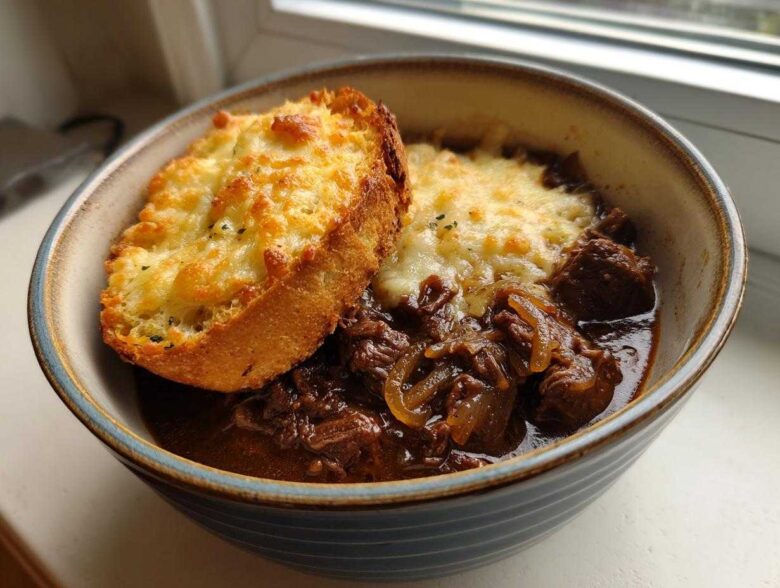
When the weather turns chilly, there’s nothing that warms my soul faster than a big, steaming bowl of stew. But honestly, sometimes a regular beef stew just feels a little… basic, you know? That’s why I landed on my absolute favorite creation: the **french onion beef stew**. It’s the best of both worlds! We take that deep, rich flavor from slowly cooked, deeply caramelized onions—the hallmark of amazing French Onion Soup—and mash it right into a super hearty beef stew base. Trust me, getting those onions right took me ages. I used to rush them, thinking 15 minutes was enough, but I wrecked batches until I finally committed to that full 40 minutes on medium-low. Seriously, patience pays off here! If you visit our About Us page, you’ll see I don’t share just any recipe—but this one? This one is pure magic.
Why This French Onion Beef Stew is Your New Favorite Comfort Food Beef Dinner
If you are searching for something truly cozy, stop looking! This recipe delivers that unbelievable savory depth you only expect from restaurant-style meals, but right in your own kitchen. It’s the ultimate in Cozy Dinner Ideas, guaranteed.
- It has the unmistakable, rich flavor profile of onion soup.
- It’s the definition of a Hearty Beef Stew Recipe—super filling!
- It’s practically hands-off once it starts simmering. I love that I can find more dinner ideas on those nights.
Achieving Tender Beef Chunks Recipe Perfection
The secret to getting meat that melts in your mouth without even trying? Low and slow wins the race every single time. Don’t rush the process. We are budgeting for about 2.5 hours just for cooking time to ensure those beef chuck cubes break down perfectly. That long simmer is what transforms tough cuts into buttery bites!
Essential Ingredients for the Best French Onion Recipe
Okay, let’s talk about what goes into this magical pot. You can’t cheat on ingredients when you’re aiming for that deep, savory restaurant quality, even in a simple french onion beef stew. First up, you need about 2.5 pounds of beef chuck, and make sure you cut those cubes squarely into about 1.5-inch pieces. They need to be sturdy enough to hold up during that long simmer! We’re using three large yellow onions, and my biggest tip here is to slice them paper-thin—think almost translucent when you start.
For the liquids, you absolutely need 6 cups of good quality beef broth; this is the backbone of our Rich Broth Stew. Then there’s the wine! I always reach for a dry red, like a Cabernet Sauvignon or Merlot. It adds incredible depth that just water can’t touch. Don’t forget the supporting players: minced garlic, Worcestershire sauce for that little umami boost, a bit of fresh thyme, and the all-important bay leaf.
Ingredient Notes and Substitutions for French Onion Beef Stew
The cheese choice is non-negotiable if you want that authentic taste: Gruyère is key! It melts beautifully and has that nutty tang that completes the French Onion flavor profile. If you’re out or allergic, Swiss is a decent backup, but honestly, Gruyère rules the roost here.
Now, about that wine. If you need a non-alcoholic option, don’t just use more broth! Try using 1 cup of high-quality beef broth mixed with 2 tablespoons of balsamic vinegar for a similar tartness boost. Also, to make this a Gluten Free Beef Stew Option, just skip the 2 tablespoons of flour when you dust the onions. Instead, make a slurry with 1 tablespoon of cornstarch mixed with 3 tablespoons of cold water near the end of cooking and whisk it in until thickened.
Step-by-Step Instructions for Classic French Onion Beef Stew
Since we are making the *best* french onion beef stew, we have to follow the steps in order. First things first: pat that beef super dry! Seriously, dry beef browns; wet beef steams, and nobody wants steamed beef, right? Season it lightly with salt and pepper, then heat your olive oil in that big Dutch oven over medium-high heat. Brown the beef in small batches, pulling it out and setting it aside as soon as it gets nice and crusty. Don’t crowd the pot! That’s rule one for great texture.
Next, we hit the step I spent so long perfecting. You’re going to need patience for the next phase, as this is how we build that foundational flavor that makes this stew legendary.
Mastering the Caramelized Onion Stew Base
This is where the magic happens! Reduce the heat down to medium-low—you want to coax the sweetness out, not burn the sugars. Add all those thinly sliced onions to the pot, add a little salt right away, and just let them cook. I mean it, let them sit there. Stir them every five minutes or so for a solid 30 to 40 minutes. You’re looking for a deep, mahogany brown color. If they start sticking too much before they change color, turn the heat down more. See how dark and sticky they are? That dark stuff on the bottom is flavor heaven (that’s your ‘fond’!), and it’s a beautiful thing.
Creating the Rich Broth Stew
Once the onions are perfect, toss in your minced garlic and let it bloom for just a minute until you can really smell it. Then, sprinkle in the flour and stir constantly for about 60 seconds to cook out that raw flour taste. Time for the wine! Pour in a cup of red wine and get your wooden spoon ready. Scrape up *every single bit* of that brown, glorious fond stuck to the bottom of the pot—this deglazing step is key to that Rich Broth Stew flavor! Let that wine bubble away until it’s reduced by about half. Then, bring back the beef, add all your broth, the Worcestershire, thyme, and the bay leaf. Give it a good stir, bring it up to a simmer, cover it, and walk away for at least two hours.
While that’s doing its thing, you can get started on the best part: the topping! Check out my favorite one-pot pasta recipe for something quick later in the week, but right now, focus on that stew!
Cooking Method Variations: Dutch Oven Beef Stew vs. Slow Cooker Beef Stew
I designed this recipe to be flexible, because let’s be real, sometimes we need a Dutch Oven Beef Stew simmering on the stove, and other times we need to just walk away from dinner for the whole afternoon! If you’re using the stovetop or oven in that trusty Dutch oven, you’re getting that concentrated, rich flavor because the liquid reduces a bit more, which is wonderful.
But if you’re leaning into the ease of a slow cooker—which is fantastic for a Slow Cooker Beef Stew—you need to make a couple of small swaps. Remember in the notes? You brown the beef and caramelize those onions on the stovetop first because the slow cooker just can’t get hot enough for that crucial browning step. Once those crucial flavor steps are done, transfer everything right into the slow cooker. Skip the flour dusting and the wine reduction phase since you won’t be reducing the liquid much anyway. Then, set it on low for about 7 to 8 hours, or 3.5 to 4 hours on high. Either way, you end up with magnificent french onion beef stew!
If you’re looking for more inspiration on low-and-slow cooking, check out my recipe for Mississippi Pot Roast—it uses similar principles for super tender meat.
The Iconic Beef Stew with Cheesy Topping: Gruyere Toast Recipe
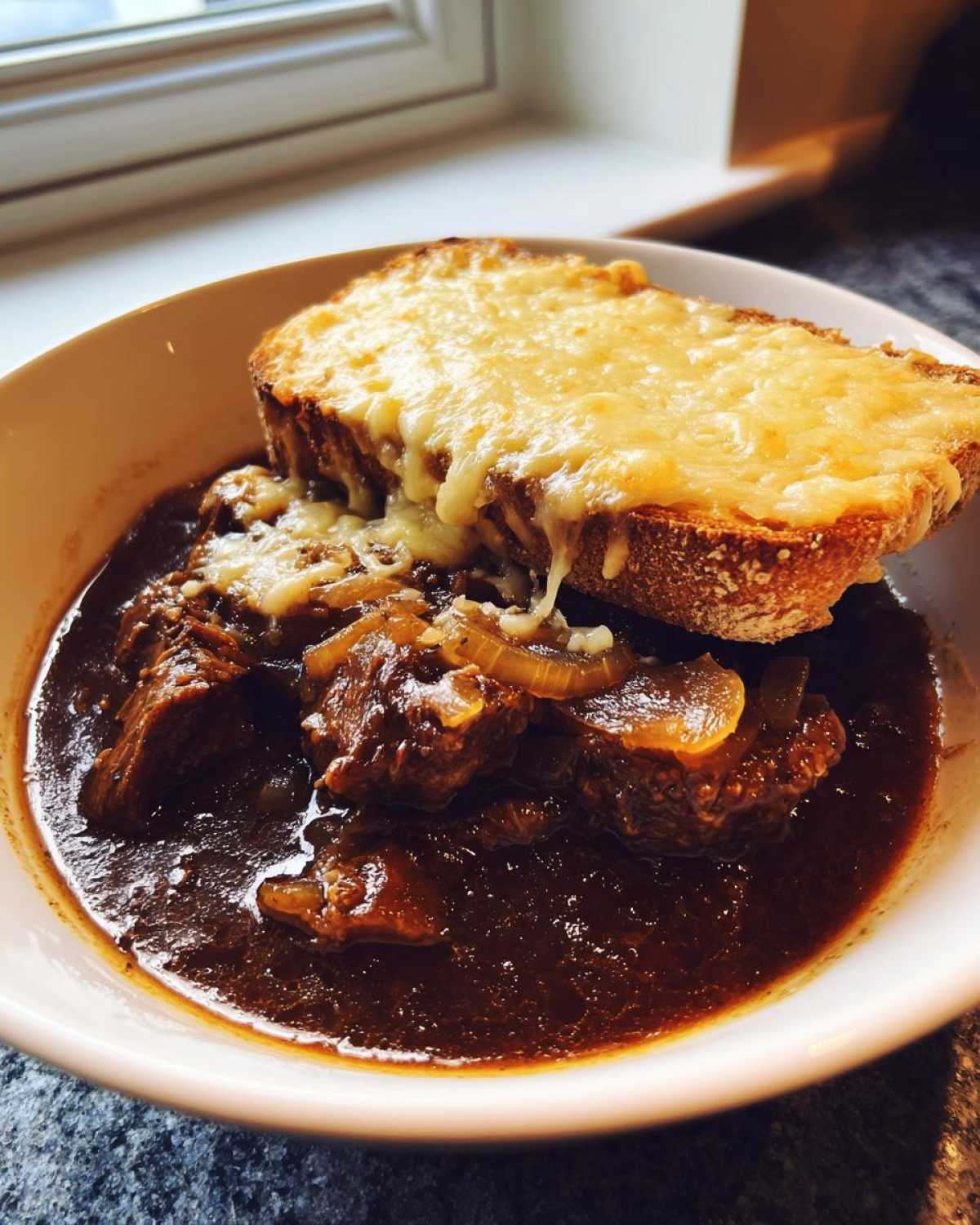
You simply cannot make a proper french onion beef stew without that glorious, crispy, cheesy hat on top! This isn’t garnish; it’s essential. Grab those four slices of sturdy bread—sourdough is my favorite for texture—and lay them out on a baking sheet. Pile that beautiful, nutty Gruyère cheese high on top of each slice. Now, listen carefully: the broiler is intense! Position your rack appropriately and watch them like a hawk. They only need about 1 to 3 minutes until that cheese is totally bubbly and golden brown. You don’t want burnt toast, just perfectly melted, glorious gold!
Once they look perfect, pull them out immediately. You can check out my recipe for Cheesy Spinach Artichoke Dip if you need another cheesy obsession, but for now, just ladle that rich stew into bowls and float one of those crisp cheese toasts right on top. Heaven!
Tips for Success with Your French Onion Beef Stew
I’ve made this recipe countless times, and over the years, I’ve gathered a few little secrets that really elevate the final bowl of french onion beef stew from great to absolute perfection. You already know about drying the beef before browning and being patient with the onions, but here are three more things I insist on that truly make a difference.
First, use the best beef broth you can find—seriously! If possible, use low-sodium, so you can control the saltiness later, or even better, use homemade bone broth. The quality of that liquid dictates the entire richness of your stew base. Second, if you have time, this stew is *always* better the next day. If you can manage it, let it cool completely and chill it overnight. The fat will solidify on top, making it super easy to skim off any excess before reheating. That chilling time just lets all those savory flavors truly marry together.
Finally, when you add that flour and cook it for a minute, make sure you’re stirring constantly with a whisk if you have one. I know we’re keeping this rustic, but dealing with flour lumps is annoying! You want it completely smooth before you hit it with the wine. For more of my kitchen wisdom, peek at my main blog page!
Storing and Reheating Your Savory Winter Stews
This stew is just as good—if not better—the second day, which is why it’s perfect for batch cooking ahead of time. If you have leftovers from your big batch of Savory Winter Stews, you have a couple of easy storage options.
For refrigeration, just let the stew cool down completely on the counter first. Once it’s room temperature, transfer it to airtight containers. It stays wonderfully fresh in the fridge for up to four days! I love having these ready for quick weekday lunches.
If you are making a giant batch and know you won’t get through it quickly, you can definitely freeze it. Once totally cool, package it into freezer-safe containers or heavy-duty freezer bags. This freezes beautifully for up to three months. If you’re looking for other make-ahead meal ideas, check out my secrets for freezer breakfast burritos!
Best Way to Reheat for Perfect Beef Chunks
When reheating, especially from frozen, the key is consistency. You want those tender beef chunks to stay soft, not dry out. The best method is slow and gentle. If reheating from the fridge, I put the stew in a pot over low heat on the stovetop and let it warm up slowly, stirring occasionally.
If it’s coming straight from the deep freeze, thaw it slowly in the fridge overnight first. Then, reheat gently on the stovetop. If you have to use the microwave, use short bursts—say, one minute at a time—and mix thoroughly between each burst. This prevents any one part from getting rubbery while the rest is still cold. Don’t forget to prepare a fresh batch of cheesy toast when you serve it!
Frequently Asked Questions About French Onion Beef Stew
I get so many questions whenever I post this recipe on Instagram! People are always asking how to tweak it for their weeknight schedule or what I do if they need a slight variation. Here are the most common things folks ask me about making the perfect french onion beef stew. If you have any more questions, feel free to reach out via our Contact page!
Can I make this French Onion Soup Stew ahead of time?
Oh, yes, please do! If you want the absolute best flavor payoff, this is one of those Savory Winter Stews that tastes even better the second day. All those savory beef and onion flavors really get to know each other overnight. Just cool the stew completely, seal it up tight, and keep it in the fridge. You’ll want to store the cheesy Gruyère toast separately, though. Keep it in an airtight bag on the counter, and just crisp it up under the broiler right before serving. Nobody wants soggy cheese bread!
What is the best way to achieve a Restaurant Style Stew at Home?
If you want that deep, dark, intensely flavored broth you get when you eat out, it all comes down to two steps: the caramelization and the wine. Don’t pull those onions off the heat until they are dark brown—I mean seriously brown, almost like dark caramel—that takes time, so be patient! And when you deglaze with the wine, use a good quality, dry red wine, not the cooking wine from the back of the cabinet. Those two elements give you that amazing depth you can’t fake.
Can I use a different cut of meat instead of beef chuck?
You can, but you have to change your cooking time! Beef chuck is perfect because it breaks down beautifully during the long, slow simmer, which makes for those easy, Tender Beef Chunks Recipe bites. If you use something leaner, like sirloin, it will get dry and tough because it doesn’t have enough connective tissue to melt into gelatin. If you absolutely must use something else, stick to stewing beef or even short ribs, and just be prepared to check for tenderness early.
How can I make this a One Pot Beef Meal if I skip browning the beef?
Well, first I have to tell you that skipping the browning step means you are skipping a huge layer of flavor, so I really advise against it for this stew! However, if you are set on keeping everything in one pot and want to save time, you can skip the step of removing the beef and just continue cooking the onions longer. But you must ensure your Dutch oven is absolutely huge, because the pot will get much more crowded after the liquid goes in, risking a soupy result rather than a real stew. For the best One Pot Beef Meals experience, brown it first!
What if I really need to skip the wine entirely?
I know some folks avoid wine for various reasons, and that’s totally fine! If you skip the wine, you need to replace both the liquid volume *and* that little bit of acidity it brings. I suggest using the full 6 cups of beef broth, but boosting the acidity by adding about 1/4 cup of apple cider vinegar or that balsamic vinegar I mentioned earlier. It’s not the exact same flavor profile, but it keeps the Rich Broth Stew from tasting flat.
Nutritional Estimates for this French Onion Beef Stew
Now, I know we cook this for comfort, not for counting calories, but sometimes people ask! Based on the standard measurements for this french onion beef stew recipe, here’s a rough idea of what you’re looking at per serving (which is one big ladle of stew plus that cheesy toast).
- Calories: About 580
- Protein: A whopping 48g!
- Fat: Around 28g
- Carbs: About 35g
Please remember, these numbers are just estimates based on what I use for ingredients. If you use leaner beef or skip the cheesy topping, those numbers will change easily. For the full breakdown, you can always check out our official disclaimer page right here.
Share Your Cozy Dinner Ideas
Wow, I really hope you loved making this french onion beef stew as much as I love eating it! If you made this incredible Comfort Food Beef Dinner, please come back and leave it a five-star rating—it really helps me know what you want to see more of!
Tell me your favorite part in the comments below. Was it the incredibly tender beef? Or those amazingly sweet, dark onions? Seriously, snap a picture and tag me on social media so I can see your beautiful bowls. If you are looking for other cozy recipes, stay tuned!
PrintClassic French Onion Beef Stew with Cheesy Gruyère Toast
A hearty stew combining the deep flavor of caramelized onions from French Onion Soup with tender beef chunks in a rich broth, served with a melted Gruyère cheese toast topping.
- Prep Time: 25 min
- Cook Time: 3 hours
- Total Time: 3 hours 25 min
- Yield: 6 servings
- Category: Dinner
- Method: Stovetop/Dutch Oven
- Cuisine: French Inspired
- Diet: Low Calorie
Ingredients
- 2.5 lbs beef chuck, cut into 1.5-inch cubes
- 2 tablespoons olive oil
- 3 large yellow onions, thinly sliced
- 1 teaspoon salt, divided
- 1/2 teaspoon black pepper, divided
- 2 cloves garlic, minced
- 2 tablespoons all-purpose flour
- 1 cup dry red wine (like Cabernet Sauvignon or Merlot)
- 6 cups beef broth
- 2 tablespoons Worcestershire sauce
- 1 tablespoon fresh thyme leaves
- 1 bay leaf
- 4 slices sturdy bread (like baguette or sourdough)
- 4 ounces Gruyère cheese, shredded
Instructions
- Pat the beef cubes dry and season lightly with salt and pepper.
- Heat olive oil in a large Dutch oven over medium-high heat. Brown the beef in batches, ensuring not to crowd the pot. Remove the browned beef and set aside.
- Reduce heat to medium-low. Add the sliced onions to the Dutch oven. Cook slowly, stirring occasionally, for 30 to 40 minutes until the onions are deeply caramelized and dark brown. Add 1/2 teaspoon salt during the last 10 minutes of cooking.
- Add the minced garlic and cook for 1 minute until fragrant.
- Sprinkle the flour over the onions and stir constantly for 1 minute.
- Pour in the red wine, scraping up any browned bits from the bottom of the pot. Let the wine reduce by half, about 3 minutes.
- Return the beef to the pot. Add the beef broth, Worcestershire sauce, thyme, and bay leaf. Season with remaining salt and pepper.
- Bring the stew to a simmer, then reduce heat to low, cover, and cook for 2 to 2.5 hours, or until the beef is fork-tender. Remove the bay leaf before serving.
- While the stew finishes, preheat your broiler. Place bread slices on a baking sheet. Top each slice with shredded Gruyère cheese. Broil for 1 to 3 minutes until the cheese is melted and bubbly. Watch carefully to prevent burning.
- Ladle the stew into bowls. Top each serving with one slice of cheesy Gruyère toast.
Notes
- For a slow cooker method, brown the beef and caramelize the onions on the stovetop first. Transfer everything to the slow cooker (omit the flour and wine reduction step) and cook on low for 7 to 8 hours or high for 3.5 to 4 hours.
- You can substitute Swiss cheese for Gruyère if needed, but Gruyère provides the classic flavor.
- If you prefer a thicker stew without using flour, let the stew simmer uncovered for the last 30 minutes to allow the liquid to reduce naturally.
Nutrition
- Serving Size: 1.5 cups stew + 1 toast slice
- Calories: 580
- Sugar: 12
- Sodium: 650
- Fat: 28
- Saturated Fat: 12
- Unsaturated Fat: 16
- Trans Fat: 0.5
- Carbohydrates: 35
- Fiber: 4
- Protein: 48
- Cholesterol: 130